Key Takeaways
- Three days is not three equal riding days. It is two moderate days and one long one, and no itinerary online tells you that plainly.
- The long day exists because of one number: the run home from Meo Vac is about 158 km, on roads that average roughly 20 km/h.
- There are two standard 3-day routes sold under the same name. The only real difference is which day absorbs that distance.
- Something gets cut on three days. Decide in advance what it is, rather than discovering it at 4pm with two hours of riding left.
- The single biggest improvement to a 3-day trip costs nothing: leave at 7am, not 9am.
Disclosure, before any of this
This site sells you nothing. No tours, no bookings, no affiliate links. I do still own a share of Jasmine Tours, a Ha Giang operator I co-founded and no longer run, so I benefit if you book with them. That matters on this page in particular, because further down I quote their prices and I recommend something that would earn them more money. I would rather you see that while you read it than find out afterwards.
Three days is enough to ride the Ha Giang (Hà Giang) Loop properly. I want to say that first, because plenty of pages imply you need four and most people simply do not have four.
But three days has a shape, and almost nobody describes it honestly. It is not three even riding days. It is two moderate ones and one that goes on much longer than you expect, and where you put that long day is the only real decision in a 3-day itinerary.
What do you need before you start?
This is a route plan, not a permission slip. It assumes four things are already settled.
- A licence Vietnam accepts. Classes changed on 1 January 2025 and most rental bikes here sit above the A1 limit. It decides your insurance, not just your fine. The full version is in whether you need a licence here.
- You can already ride. This road is not the place to learn. If you have never ridden anything, read the honest answer on riding with no experience before you read a route plan.
- A bike with engine braking. The descents matter more than the climbs on this route, which is the whole argument in automatic versus semi-automatic versus manual.
- You arrive the night before. Not on the morning bus. A 3-day loop that starts at midday is a 2.5-day loop, and the half you lose is the half with the margin in it. See getting from Hanoi to Ha Giang.
Why is one day so much longer than the others?
Here is the thing that makes a 3-day plan make sense, and I have never seen it on an itinerary page.
The distances between the towns are not evenly spaced.
| Leg | Distance |
|---|---|
| Ha Giang → Yen Minh (Yên Minh) | 101 km |
| Yen Minh → Dong Van (Đồng Văn) | 44 km |
| Dong Van → Meo Vac (Mèo Vạc) | 24 km |
| Meo Vac → Ha Giang | 158 km |
Inter-town distances and average speeds from the Wikivoyage Ha Giang Loop page, retrieved 2026-08-08. I am citing a non-commercial wiki here rather than an operator, because operators have an interest in how long you think this takes.
Look at the last row. The run back from Meo Vac is longer than the first three legs put together.
Now the second number, which matters more. The same source puts the average riding speed on this loop at about 20 km/h overall: around 30 km/h on the good sections, and as low as 9 km/h on rough provincial roads. That is not slow riding. That is switchbacks, gravel, trucks, and the fact that you stop.
Multiply them. 158 km at 20 km/h is roughly eight hours of moving. Add lunch, fuel, photographs and one stretch of roadworks, and you have a day that starts at 7am and is not finished at 5pm.
That single calculation explains every 3-day itinerary you will read. It also settles a disagreement between sources: one operator’s route guide puts that final leg at 6 to 7 hours moving and 9 to 10 hours door to door (retrieved 2026-08-08), while summaries elsewhere claim 3 to 4 hours. The arithmetic says the 3-to-4-hour version is wrong, and I would plan for the upper end.
Tiredness on the last day is the specific risk of a 3-day loop, and it is worth naming. You are on the longest leg, on the day your concentration is worst, sharing a road with gravel trucks. The hazards themselves are covered in the safety guide. The scheduling fix is simply to start early enough that you are never riding the last hour in a hurry.
Version A: the classic clockwise loop
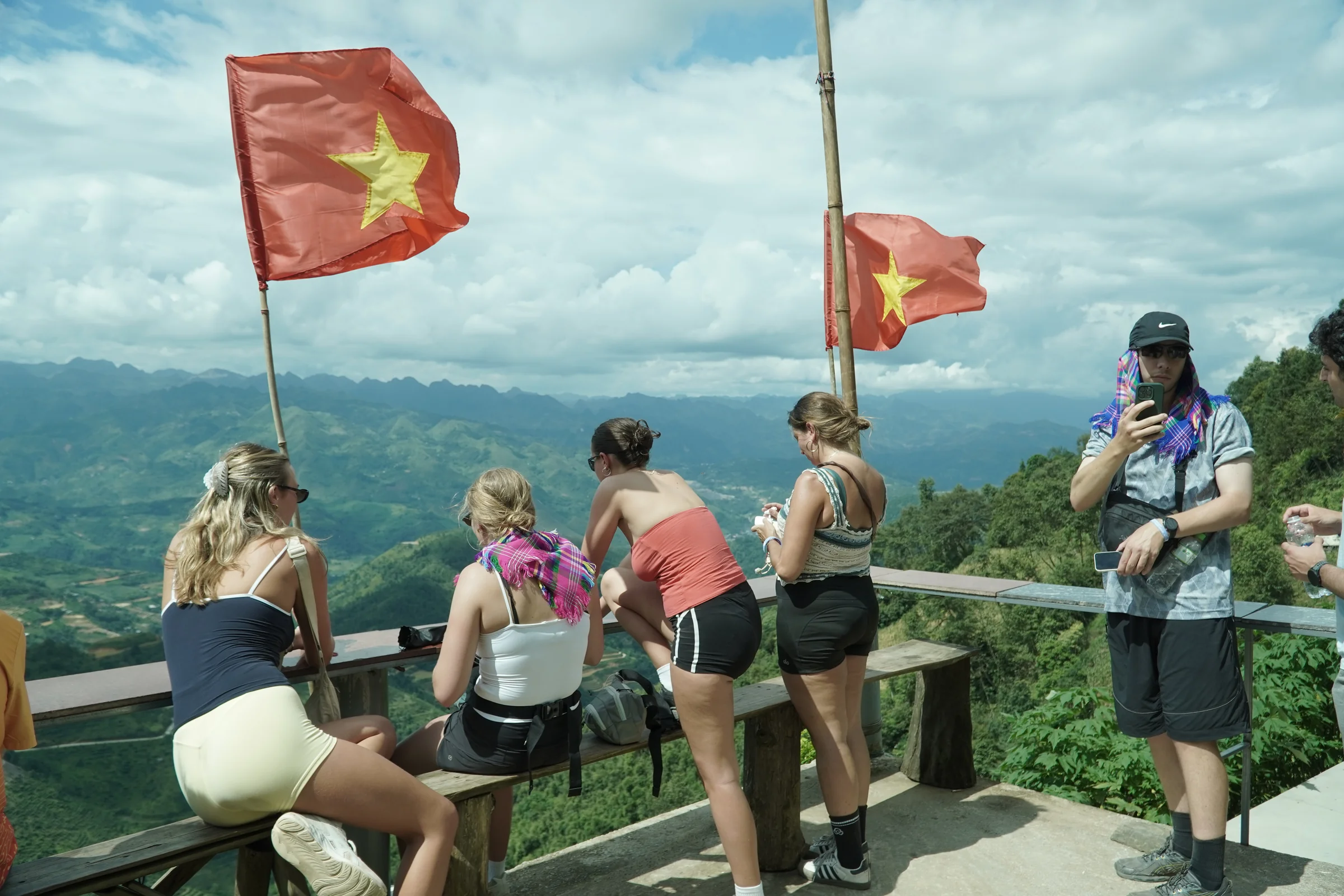
This is the one most operators run, and the one where the long day comes last.
Day 1. Ha Giang to Yen Minh, about 101 km. North on the QL4C. You climb the Bac Sum pass early, which is where most people realise the riding is real, then Quan Ba (Quản Bạ) and the Heaven’s Gate viewpoint above the Tam Son (Tam Sơn) valley. Yen Minh is a working market town, not a sight. Roughly four to five hours moving, a full day with stops.
Day 2. Yen Minh to Dong Van, about 44 km. The shortest leg and the best one. Tham Ma (Thẩm Mã) pass and its switchbacks, the Sung La valley, the Hmong King’s Palace, and Dong Van’s old quarter to sleep in. Two to three hours of actual riding, which leaves a genuinely unhurried day.
Day 3. Dong Van to Meo Vac, then home, about 158 km. Ma Pi Leng (Mã Pí Lèng) first thing, while the light is good and the road is quiet. Then Meo Vac, then the long haul back via Mau Due (Mậu Duệ) and Yen Minh. Six to eight hours moving. This is the day the whole plan is built around.
Ride Ma Pi Leng before 9am on day 3. It is the one section where being early changes what you see. The tour vans have not arrived, and the fog usually has not filled the gorge yet.
Version B: the Du Gia version
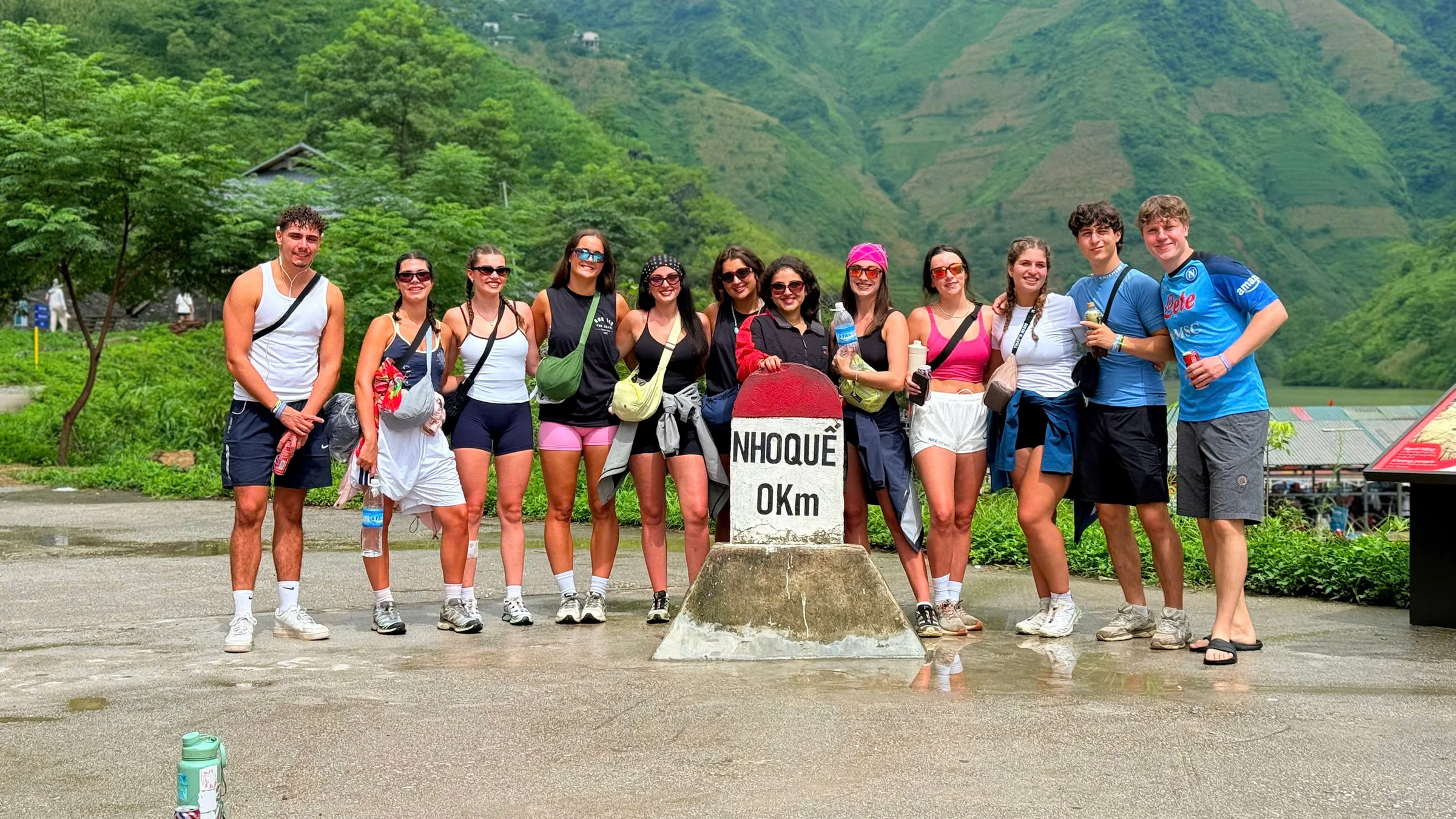
Same three days, different shape. Here the long day is day one, and the reward is that you finish somewhere quiet instead of somewhere far.
Day 1. Ha Giang all the way to Dong Van, about 145 km. You compress Version A’s first two days into one. It is a long first day, but it is the day you are freshest, and the road is the well-surfaced QL4C the whole way.
Day 2. Dong Van to Du Gia (Du Già) via Ma Pi Leng and Meo Vac. The best riding on the Loop, with the Nho Que (Nho Quế) gorge in the middle of it, ending in a Tay valley with a waterfall and homestays where the family eats with you.
Day 3. Du Gia back to Ha Giang, roughly 70 km. Short, green, and mostly downhill in character. You finish by early afternoon.
The catch is the one I hear about most. On the three-day version of this route you reach Du Gia tired and leave the next morning early, so you get the place without the afternoon in it. Almost nobody tells me they wish they had spent longer in Dong Van. Plenty of people tell me they wish they had given Du Gia one more night. If you are weighing that extra night, our look at where to stay in Du Gia shows what one of the valley’s rooms actually looks like.
So which version should you ride?
- First long trip on a bike: Version A. The short middle day gives you a recovery day in the middle, and you will want it.
- Confident rider, want the best last day: Version B. Finishing early in a quiet valley beats finishing late on a truck road.
- Arriving on the morning bus anyway: Version A, and accept that day one is short. Version B’s first day does not fit around a late start.
- Riding in October to December: Version A. Daylight is shorter and fog is likelier, and Version B’s 145 km opening day has no slack in it. Check what the month actually does to the roads first.
- Riding pillion with an easy rider: either, and it matters less. Someone else is absorbing the fatigue. That trade-off is the subject of self-drive versus easy rider.
What does three days actually cut?

Something goes. It is better to choose it now.
Lung Cu (Lũng Cú) flag tower. The northernmost point, and the first casualty of almost every 3-day plan. It is a substantial detour off the main route for a viewpoint and a set of steps. On four days it fits comfortably. On three it costs you the margin on your longest day.
The unhurried stop. On four days you can sit at a roadside stall for an hour because the view is good. On three you look at the time first. This is the real difference between the two trips, and it is not a sight you can point at on a map.
Du Gia as a place rather than a bed. On Version B you sleep there. You do not get an afternoon there. Those are different things.
Is the Nho Que boat worth the time?

The boat trip into the Tu San gorge, under the cliffs below Ma Pi Leng, is the most-photographed thing on the Loop and the most commonly underestimated in a schedule.
The boat itself is short. The detour is not. You leave the pass, drop down a narrow access road to the pier, wait for a boat to fill, ride the gorge, then climb all the way back up. Sources put the ticket somewhere around 100,000 to 150,000 VND (~$4 to $6) per person, checked August 2026, and the spread between those quotes is itself a warning that the number moves and that you should ask, not assume.
Budget two hours for the whole detour, not the twenty minutes the boat takes. On Version A’s day three, those two hours come directly out of the eight-hour ride home.

If you are riding Version A and running late, this is the item to drop. It is the single most skippable paid thing on the Loop, and no operator will volunteer that, including the one I hold a share in.
The 4-day upsell is mine too
I have just spent an article explaining that three days contains one hard day, which points fairly naturally at booking four. So here is my interest in that, plainly.
Jasmine Tours publishes a self-riding 3-day trip at 3,408,000 VND and the 4-day at 4,248,000 VND, checked August 2026 at their public booking page. The difference is 840,000 VND. I hold a share in that company. If this article talks you into a fourth day, I earn a fraction of that, and you should weigh what I write about day counts with that in front of you.
So let me give you the version that earns me nothing. If three days is what you have, the fix that improves the trip most is free. Leave at 7am instead of 9am on the long day. Cut Lung Cu. Decide about the boat before you are standing at the turnoff. Those three choices buy you more margin than the fourth day does, and they cost nothing.
And if you would rather not book anything at all, the route above is the QL4C and it is signposted. What a guided trip buys is not navigation. It is somebody who speaks Vietnamese when something goes wrong, which is a real thing to buy and a different thing from what it is usually sold as. The full breakdown of what a trip costs either way is in the Ha Giang Loop cost guide, and the day rates for bikes, with the insurance line most quotes leave out, are in the rental price breakdown.
A note on method: the distances and average speed here come from a non-commercial wiki rather than an operator, because time estimates are exactly where a commercial interest shows up. The route descriptions are the province I was born in and the pattern I see in what travellers tell me afterwards; Jasmine Tours took 28,943 guests round this Loop during 2025, and the regrets they report are consistent enough to be worth writing down. I do not run those trips and I do not guide on them. Where sources disagree, I have said so rather than picking the number that suited the argument.
Common questions
Is 3 days enough for the Ha Giang Loop?
Yes, and most people ride it in three. What three days does not give you is slack. One of the days is long, around 158 km on roads averaging about 20 km/h, so the plan has to be built around where that day goes rather than around what you want to see.
What is the standard 3-day Ha Giang Loop route?
There are two. The classic runs Ha Giang to Yen Minh, Yen Minh to Dong Van, then Dong Van through Ma Pi Leng and Meo Vac back to Ha Giang. The other rides straight to Dong Van on day one, out to Du Gia on day two, and home on a short day three.
How long is the Ha Giang Loop?
Roughly 330 to 350 km for the classic circuit, and about 380 to 430 km once the Du Gia leg is added. There is no single correct figure because there is no single route, and the variance between versions is close to a full riding day.
Which day of the 3-day loop is hardest?
The one carrying the Meo Vac to Ha Giang leg. On the classic route that is day three, at six to eight hours of moving time. On the Du Gia route the long day is day one instead, which some riders prefer because they are fresher.
Can you do the Ha Giang Loop in 2 days?
It is ridden in two, but it stops being a scenic trip and becomes a distance exercise. You would be covering the same ground with no margin for weather, a breakdown, or a slow stretch of roadworks. If two days is genuinely all you have, riding pillion is the version of it that still works.
What time should I set off each day?
Seven in the morning on your long day, and no later than eight on the others. Nothing else you can do for free improves a 3-day loop as much. Late starts are why people end up riding the last hour tired and in fading light.
If you only take one thing from this page, take the 158 km. Decide which day carries it, plan that day at eight hours rather than five, and the rest of a three-day loop looks after itself.
Written by Jasmine (Thuy Bui), born and raised in Ha Giang. This site sells nothing and carries no affiliate links. I co-founded Jasmine Tours, a licensed local tour operator, and I still hold a share in it; the team there operates it without me. My work now is free advice for travellers and social projects in the province.
Leave a Reply