Key Takeaways
- There is no single best month, and that is not a cop-out. Vietnam has three climate zones whose dry seasons barely overlap, so “when” and “where” are the same question.
- February to April is the only stretch when all three zones are good at once. That is the real answer to the question as asked.
- The north is dry from November to April. The central coast is dry from February to August. The south is dry from December to April.
- If you already have your dates, skip to the grid. It tells you which region to point the trip at rather than which month you should have booked.
- The worst combination is the central coast between September and November, when the typhoon risk is concentrated.
Six of the guides on the first page of Google answer this question, and they give six different answers. Not slightly different. Non-overlapping.
They are not wrong. They are each answering for a different part of a country that is 1,600 km long, and none of them says so.
Why does every guide give a different answer?
Here is what page one actually says, crawled on 11 August 2026:
| Source | Says the best time is |
|---|---|
| Responsible Travel | May, June and September |
| Travel + Leisure | Late February to early March |
| Selective Asia | November to April |
| Vietnam Airlines | March to April, and September to November |
| Scott Dunn | November to April |
| Lonely Planet | July and August for beaches, December to March for Hanoi and Ho Chi Minh City |
Look at May and June. Responsible Travel puts them among the best months of the year. Selective Asia and Scott Dunn both put them outside the good season entirely.
Both positions are defensible, because in May the central coast is dry and sunny while the north is turning hot and wet. One source is thinking about Hoi An. The other is thinking about Hanoi. Neither tells you which.
This is not a pedantic complaint about travel writing. It has a cost. Someone reads “November to April” on two of those six pages, books November, flies into Da Nang for a beach week and lands in the wet season with a typhoon watch running. Both pages were telling the truth about the north.
That is the whole puzzle. Once you know the country has three separate weather systems, every one of those six answers becomes locally true and globally useless.
What are Vietnam’s three climate zones?
Vietnam Airlines, the national carrier, sets them out on its travel guide page, retrieved 11 August 2026. The month ranges below are theirs.
Northern Vietnam. Hanoi, Ha Long Bay, Sa Pa, and Ha Giang. Dry and cool November to April. Wet June to August, described as heavy rain and high humidity.
Central Vietnam. Hoi An, Da Nang, Hue, Nha Trang. Dry February to August. Wet September to January, with the risk of typhoons.
Southern Vietnam. Ho Chi Minh City, the Mekong Delta, Phu Quoc. Dry December to April. Rainy May to November, though the rain usually passes quickly.
Line those three up and one window survives in all of them: February to April. If your dates are genuinely open, that is your answer, and you can stop reading.
Most people’s dates are not open. That is what the next section is for.
Which month should you go, and where?
Read this the other way round from every other guide. Find your month along the top, then read down to see which zones are worth your time.
Three worked examples, because these are the exact questions people were asking in travel groups this week.
- “Is October okay?” Yes for the north, and it is one of the better months there. No for Da Nang and Hoi An, which are in the wet season with typhoon risk. The south will be showery but workable.
- “Hanoi and Ho Chi Minh City in late October. Worth adding Da Nang and Phu Quoc?” Da Nang, no. Phu Quoc, marginal. Both of your anchor cities are fine, so spend the extra days on them rather than flying into the one region that is having its worst month.
- “January, Hanoi or Da Nang?” Hanoi. It will be cold and grey, sometimes properly cold, but it is the dry season. Da Nang in January is still in the wet half of its year.
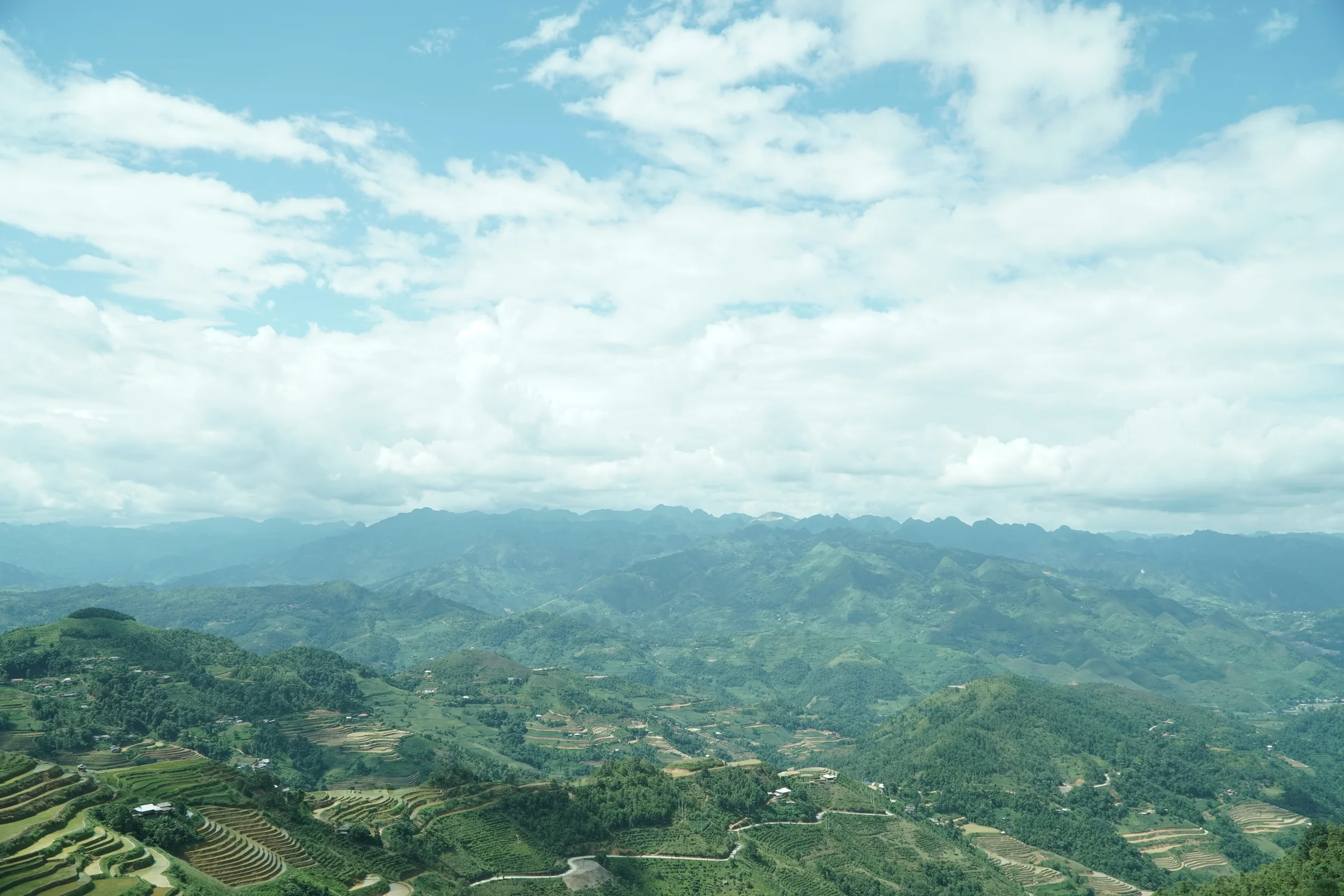
One more thing the grid cannot show. Green does not mean warm. The northern dry season is cool at the start and genuinely cold in the mountains in December and January, in a way that catches out people who packed for Southeast Asia and nothing else. Cold and dry still beats warm and wet for riding, but pack for it.
When is the worst time to visit Vietnam?
The honest answer is a place-and-time pair, not a month.
The central coast, September to November. This is the one genuine avoid. It is the wet season for that zone and it carries the concentrated typhoon risk. A typhoon does not usually ruin a whole trip, but it can close a coastal road, ground a flight or shut Ha Long Bay for two days, and if those two days were your only two days there, it ruined your trip specifically.
The northern mountains, June to August. Hot, humid and the wettest part of the northern year. People still travel then and it is beautiful and green. It is simply the hardest version.
Anywhere, during Tet. Not because of weather. See below.
Notice what is not on that list. There is no month when the whole country is a write-off. Every month of the year has at least one zone worth being in, which is the practical reason a Vietnam trip is more flexible than it looks.
What about Tet?
Tet is the Vietnamese Lunar New Year and the biggest holiday of the year. Vietnam Airlines places it in “late January or February”. The exact date moves with the lunar calendar, so check the date for the year you are travelling rather than trusting a fixed week.
What it means for a visitor:
- Prices and crowds peak. Domestic transport books out because the entire country is travelling home at once.
- Things close. Family businesses, small restaurants and some shops shut for several days. In a small town this is most of what there is.
- It is also the best week to see the country as itself. Flower markets, families, streets that look completely different. If you want that, come for it deliberately and book everything early.
The mistake is arriving during Tet by accident, on a tight itinerary, expecting normal opening hours.
When should you ride the Ha Giang Loop?
Ha Giang sits in the northern zone, so the grid above applies: October to April for dry and cool, June to August for the wet version.
The short version for a rider: the two windows that come up again and again are September to November and March to April. Autumn gives you dry roads and the rice terraces at their most photographed. Spring gives you the same dry roads without the autumn crowds. December and January are dry too, and cold enough that a full day in the saddle is a different proposition.
That is the country-level answer. The province has its own pattern on top of it, including a cold season that surprises people who packed for Southeast Asia and a green season that is genuinely the most beautiful time to be there if you accept the rain. Ha Giang weather, month by month goes through it properly.
If you are weighing the trip itself rather than the timing, self-drive versus easy rider is the first real decision, and what the Loop costs is the second. Getting up there from the capital is covered in Hanoi to Ha Giang.
This article answers when and where. If what you want to know is what the wet season is actually like once you are in it, and what it cancels, Vietnam’s rainy season takes that apart region by region.
Common questions
What are the best and worst months to visit Vietnam?
February to April is the best window, because it is the only stretch when the north, the central coast and the south are all in their dry seasons at once. The worst pairing is the central coast between September and November, which is that zone’s wet season and carries the concentrated typhoon risk. No month is bad everywhere.
When should you avoid going to Vietnam?
Avoid the central coast from September to November, and avoid arriving anywhere during Tet unless you have planned for it. Otherwise there is no month to avoid outright, only regions to avoid in a given month.
Is November a good time to visit Vietnam?
Very good for the north, including Hanoi, Sa Pa and Ha Giang, which are in their dry cool season. Poor for the central coast, which is still in its wet season. The south is at the end of its rainy months and is workable. A November trip should be weighted north.
Is Vietnam’s rainy season a reason not to go?
Usually not. In the south the rain arrives as heavy showers that pass, rather than all-day grey. The northern mountains in summer are wet but spectacular. The one place where the wet season genuinely changes the odds is the central coast in autumn, because of typhoons rather than rainfall alone.
Can I see the whole country in one trip regardless of season?
Yes, but in some months you will be trading. Between May and August a north-to-south route means good weather on the central coast and the wet season at both ends. Between September and November it means good weather in the north and the worst of the year in the middle. Only February to April lets you travel the length of the country without a compromise.
A note on method: the season ranges here come from one source, the national carrier’s own travel guide, quoted as month ranges rather than converted into temperatures or rainfall figures I cannot stand behind. The good, mixed and poor ratings in the grid are my reading of those ranges, not a measurement. Weather is a probability, not a schedule, and a grid like this is a way to place a bet rather than a promise about your fortnight.
Leave a Reply